Digging into a childhood dream
By Seb F.
This summer, I decided to follow a childhood dream and give field archaeology a shot. The EVOKE program on picturesque Kythira, Greece, was an easy commitment to make. As a history major fascinated by ancient Greece, it felt like a perfect match.
I could not be more satisfied. I love the team, the view of the Peloponnese from site, and the feeling of doing something genuine. It is exhilarating to me, unearthing bits of history thousands of years old, knowing that what we find are among the last remnants of someone's legacy. Studying these finds and trying to learn about the past residents of Vythoulas makes me feel that we are paying our respects to those who came before us.
As a result of this field season, I can now picture myself doing more archaeology in the future. But initially my history major lurked beside me like a shadow I couldn’t escape. Several of my colleagues here on Kythira are focusing fully on archaeology in their degree. They are already highly trained in field skills and material culture understanding. Next to them, I initially felt a bit lost on how to proceed academically. Is history too abstract, too removed from the reality in the dirt? Do I need to switch to archaeology?
As always, the answer has turned out to be a compromise. Over the past few weeks, I have come to realize that the ideal historian is also an archaeologist. Through archaeology, historians can recover information that differs from what texts provide. We can then use our historical training to better interpret what we have excavated by placing material in dialogue with the historical records of their past period. I now think of archeology as another major tool in a historian’s arsenal, in which I am digging up never-before-seen primary sources. If I become an academic, I would want to draw on my own excavation findings as primary sources for my historical research.
What Has Archaeology Taught Me So Far?
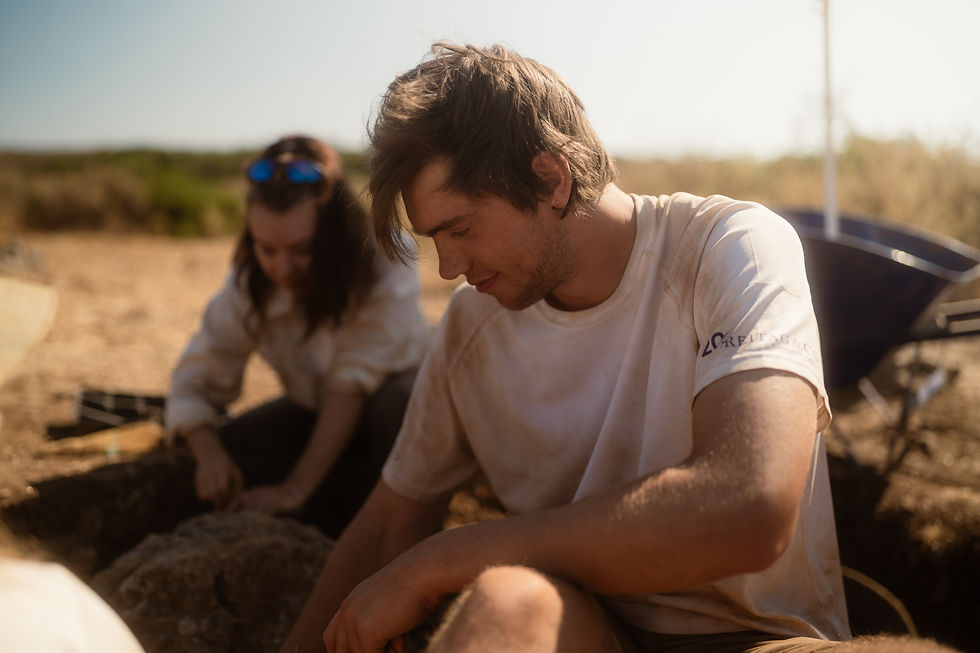
Swinging my pickaxe in the Aegean sun, I also found myself experiencing archaeology as something deeply empathetic. At its core, it is about understanding the everyday lives and experiences of our predecessors and, for EVOKE, trying to extract lessons we can use today. Without the ability to see things through someone else's eyes, one would struggle to make sense of finds that initially seem unrelated or irrelevant, like a broken pot, scattered roof tiles, or a wall that does not make sense upon its initial discovery.

That practice is worth implementing in the rest of my life more consciously. I have noticed I am becoming more intentional in conversation and more deliberate about trying to see things from the other person's perspective. If I can learn to look through the eyes of someone who lived four thousand years ago, I figure I owe it to the people in front of me today to try just as hard with them.


Comments